How to Take Homoeopathic Medicine: The Empty Stomach, the Untouched Pills and the Alcohol
The clean mouth, the untouched pills and the famous food list, explained by what each one is actually for.
 Dr. Aarti Gadhavi, BHMS
Classical Homoeopath, Magarpatta, Pune
Medically reviewed by Dr. Aarti Gadhavi, BHMS, on 10 September 2026
Dr. Aarti Gadhavi, BHMS
Classical Homoeopath, Magarpatta, Pune
Medically reviewed by Dr. Aarti Gadhavi, BHMS, on 10 September 2026

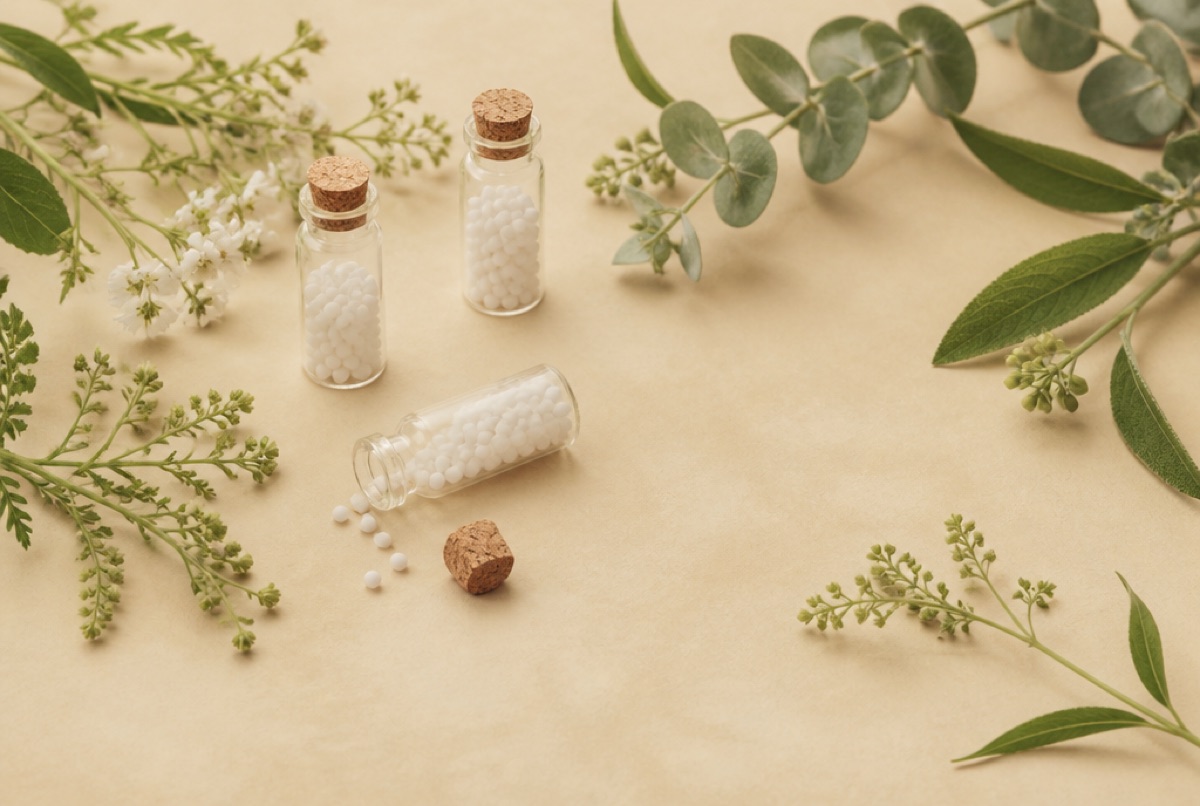
Homoeopathic medicine is usually taken on a clean mouth, roughly fifteen to twenty minutes away from food, drink, toothpaste or anything strongly flavoured. The pills are tipped into the cap and then into the mouth rather than handled, and they are left to dissolve rather than swallowed down with water. The alcohol in liquid doses is a preservative. None of these instructions is superstition, and none of them matters more than actually taking the dose you were given.
Almost everybody who is handed a paper packet of small white pills for the first time asks the same two questions on the way out of the room. When do I take these, and is it true about the coffee.
This blog answers both, and explains what each instruction is actually for, because an instruction you understand is one you will still be following in the sixth week.
Why there are any instructions at all
Homoeopathic doses are prepared by repeated dilution and are given in very small quantities. Because the quantity is small, the instructions are built around not swamping it with something strongly flavoured at the same moment, and around keeping the medicine stable in your cupboard for as long as you are meant to be taking it.
That is the honest reason. Some of what circulates about homoeopathic medicine online treats these habits as ritual, which does the subject no favours.
If you want the reasoning behind the dilution itself rather than the handling of it, that is a separate question and it is answered in potency and dilution, answered plainly.
What "empty stomach" actually means
The phrase is misleading in English and it worries people more than it should. Nobody is asking you to fast.
What is being asked for is a clean mouth at the moment the dose goes in.
In practice that means a gap of roughly fifteen to twenty minutes before and after the dose, away from food, tea, coffee, juice, toothpaste, mouth freshener and paan. If your day makes that impossible at one of the doses, take it anyway with the shortest gap you can manage and tell your homoeopath at the review.
| Around the dose | What is meant | If you cannot |
|---|---|---|
| Before | Fifteen to twenty minutes with nothing but water | Rinse the mouth with plain water and take it |
| After | A similar gap before your next food or drink | Shorten the gap rather than skip the dose |
| Toothpaste | Brush well before or well after, not alongside | Take the dose before brushing in the morning |
| Plain water | Allowed at any point | No adjustment needed |
Why you are told not to touch the pills
Tip the pills into the cap of the bottle or onto a clean spoon, then into your mouth. This is the instruction people find strangest and it has a very ordinary explanation.
Hands carry oils, soap residue, food and whatever you last touched, and the pills are small, sugary and porous.
Treat it as the same category of habit as not putting your fingers into a shared tin of biscuits. If a pill does land in your palm, take it.
Do not discard it and do not treat the dose as ruined.
Let them dissolve rather than swallowing them
The pills are placed under or on the tongue and allowed to melt. They are small and sweet and they go in about half a minute.
Washing them down immediately with water is simply not how they are intended to be taken.
For a small child who cannot hold anything in the mouth, the usual practical answer is to crush the pills between two clean spoons and give the powder, or to dissolve them in a little plain water and give that. Ask your homoeopath which of the two she wants for your child rather than deciding it at home.
The alcohol in the liquid doses
Liquid preparations are made up in alcohol. This is a preservative and a solvent.
It is what keeps the preparation stable on a shelf in a Pune summer rather than turning after a fortnight, and the quantity in a few drops is very small.
It is still worth raising if alcohol is something you avoid, for whatever reason, or if the medicine is for a child. Say so at the consultation.
Preparations are dispensed in more than one form and this is a normal thing to discuss, not an awkward one.
Coffee, onion and garlic: the famous list
This is the part everybody has heard about and it is worth being straight about. There is a long tradition in homoeopathic practice of asking people to keep strongly flavoured and strongly aromatic things away from the dose, and coffee, raw onion, raw garlic, mint and camphor are the names that come up most.
Practitioners differ on how strictly this is applied, and it is reasonable to ask your own homoeopath what she wants from you rather than following a list you found online. What is consistent across every version of the advice is the timing rather than a ban.
The concern is about these things arriving in your mouth at the same moment as the dose, not about your diet in general.
- Ask, do not assume. Your practitioner will tell you which of these she actually wants avoided in your case.
- Timing beats abstinence. Moving your coffee an hour away from the dose is usually the whole answer.
- Do not change your diet drastically on your own. Particularly not if you are being treated for something where your food already matters.
- Tell her what you actually did. A review is worth less if she is being told what you were supposed to have done.
If you miss a dose, or take one twice
A missed dose is taken when you remember, unless you have almost reached the next one, in which case carry on with the schedule as normal. Do not double up to make the arithmetic work.
If you have accidentally taken an extra dose, it is not usually a cause for alarm, but do say so at your review, because it is genuinely useful information about how you responded. What matters to your homoeopath is an accurate record of what went in and when.
The first consultation is a full 90 minutes. You leave it understanding your own case, whatever you decide to do next.
Storing it, and what actually spoils it
Keep the container closed, out of direct sunlight, away from heat, and away from anything strongly aromatic. A cupboard shelf is fine.
A shelf directly above a gas hob, a windowsill in May, or the same drawer as a bottle of perfume or a strip of camphor is not.
Do not decant the pills into another container to save space, and do not return unused pills to the bottle after tipping them out. Both are ordinary hygiene, and the second one is how a whole bottle gets contaminated by one careless moment.
Taking it alongside prescribed medicine
If you are on medicine prescribed by another doctor, you keep taking it. Separate the timings by a reasonable gap for the practical reasons above, and carry on with both.
Nobody at this clinic will ask you to stop, reduce or space out a prescribed medicine, and any practitioner who does is a practitioner to walk away from.
How the two are actually run together, and what your other doctor should be told, is set out in homoeopathy alongside conventional treatment.
Travelling with it
Homoeopathic pills travel easily. Keep them in the original labelled container, keep them in your cabin bag rather than in a hold bag where the temperature swings, and carry your prescription or the clinic slip if you are going abroad, since customs rules on medicines vary by country.
Liquid preparations follow the same cabin liquid limits as anything else in your bag. If a long trip falls in the middle of a course, mention it before you travel rather than after.
The thing that matters more than all of this
Take the dose. People become so anxious about the gap and the coffee and the fingers that they skip doses rather than take one imperfectly, and a skipped dose is a genuinely worse outcome than one taken twelve minutes after a cup of tea.
These instructions exist to protect a preparation that is easy to look after. They are not a test, and getting one of them slightly wrong on a Tuesday does not undo your treatment.
If you are unsure about something specific to your case, ask at the first visit or at your review rather than deciding alone.
Common questions
Can homoeopathic medicine be taken on an empty stomach?
Yes, and that is usually how it is advised. What is being asked for is really a clean mouth rather than an empty stomach. A gap of about fifteen to twenty minutes either side of food or drink is the standard instruction, and plain water is fine at any time.
Why should homoeopathic tablets not be touched with the hands?
Because hands carry oils, soap residue and whatever you last handled, and the pills are small, sugary and porous. Tipping them into the bottle cap and then into your mouth is a hygiene habit. If one lands in your palm, take it anyway.
Do I really have to give up coffee, onion and garlic?
Usually not entirely. The traditional concern is about strongly flavoured and aromatic things arriving in your mouth at the same moment as the dose, so moving them away from the dose by an hour is normally the whole answer. Practitioners differ on how strictly they apply it, so ask yours what she wants in your case.
Why does the liquid homoeopathic medicine contain alcohol?
The alcohol is a preservative and a solvent. It keeps the preparation stable on a shelf rather than spoiling, and the quantity in a few drops is very small. If you avoid alcohol or the medicine is for a child, say so at the consultation, because it can be dispensed in other forms.
What should I do if I forget a dose?
Take it when you remember, unless the next dose is almost due, in which case simply carry on with the schedule. Do not double up. Mention any missed or doubled doses at your review, because an accurate record of what you actually took is what makes the review useful.
Written for the clinic of Dr. Aarti Gadhavi, BHMS, a classical homoeopath practising in Magarpatta, Hadapsar, Pune. It carries no remedy names, no cure claims and no invented statistics, because none of those belong on a doctor's website. If something here does not match what your own doctor has told you, your own doctor knows your case and this page does not.