Homoeopathic Medicine for Urticaria: Why a Careful Homoeopath Will Not Name One
Hives that appear from nowhere and vanish by evening carry more information than most people realise.
 Dr. Aarti Gadhavi, BHMS
Classical Homoeopath, Magarpatta, Pune
Medically reviewed by Dr. Aarti Gadhavi, BHMS, on 27 July 2026
Dr. Aarti Gadhavi, BHMS
Classical Homoeopath, Magarpatta, Pune
Medically reviewed by Dr. Aarti Gadhavi, BHMS, on 27 July 2026
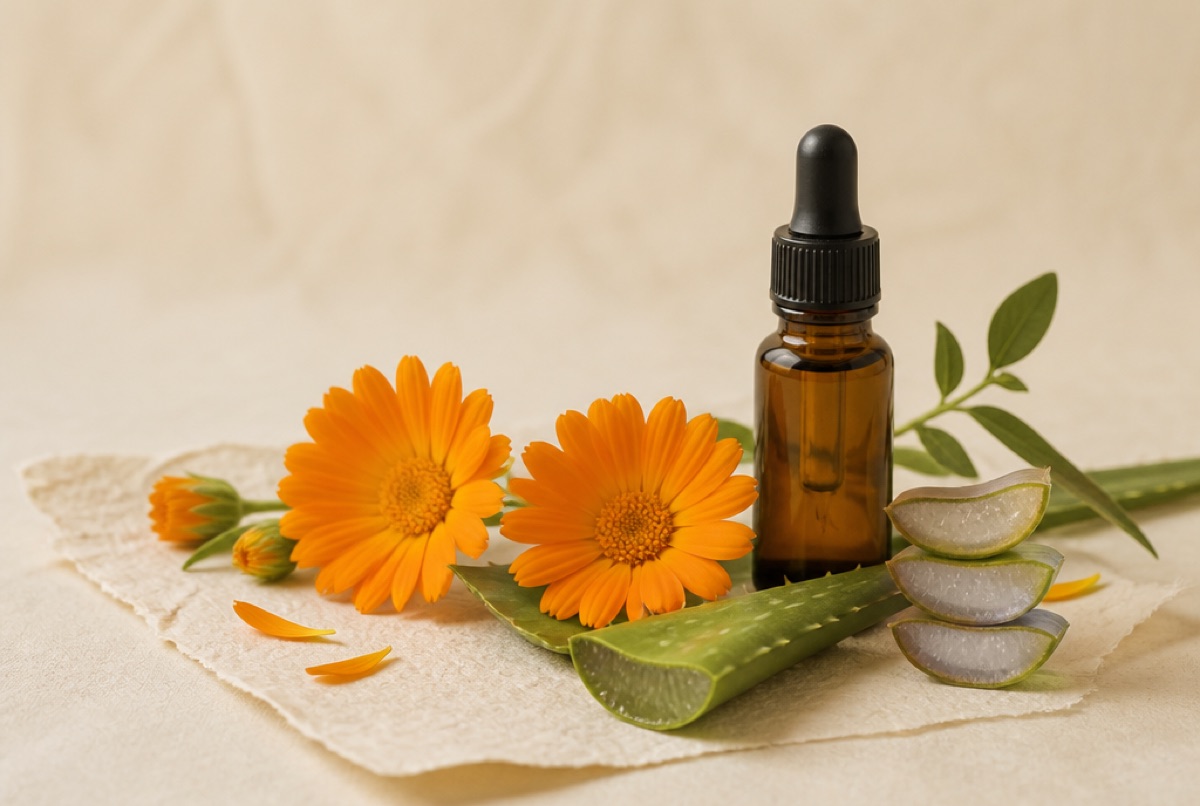
There is no single homoeopathic medicine for urticaria, and a list that offers you one is not describing classical practice. In classical homoeopathy the remedy is selected for the individual and the exact behaviour of their hives, including what brings them out, what settles them, the time of day and what else the person carries. Two people with identical looking wheals routinely need entirely different remedies.
Urticaria is one of the most searched skin complaints in India, and almost every result offers the same thing: a remedy name next to the word hives. It is a tidy answer to an untidy problem, and it is not how classical homoeopathy works.
This blog gives the honest version. It will not name a medicine, and by the end you will understand why naming one would be the least useful thing anybody could do for you.
What is actually happening in the skin
A wheal is fluid leaking from small blood vessels into the upper layer of skin, driven mostly by histamine released from mast cells sitting there. That is why wheals are raised, pale in the centre, red at the edge and intensely itchy, and why they can appear and disappear within hours.
The important consequence is that urticaria is a final common pathway. Foods, infections, medicines, pressure, heat, cold, exercise and stress can all end at the same door.
The wheal tells you the door was opened. It does not tell you who opened it.
Acute and chronic, and why six weeks is the dividing line
Urticaria lasting less than six weeks is called acute, and it is usually set off by an infection, a food or a medicine. It often resolves and never returns.
Beyond six weeks it is called chronic, and the whole approach changes.
Here is the fact that saves people the most anguish. In a large proportion of chronic cases, no external trigger is ever identified, however hard anybody looks.
That is a recognised and normal outcome. People spend months eliminating foods one by one and conclude they have failed at the detective work, when in truth there was frequently nothing external to find.
The physical urticarias, which are worth knowing about
A group of people react to a physical stimulus rather than to anything they eat. These are worth recognising because they are reproducible, which makes them unusually satisfying to identify.
| Type | What brings it out |
|---|---|
| Dermographism | Firm stroking of the skin. A raised line appears where you scratched, often within minutes |
| Cholinergic | A rise in body temperature. Exercise, a hot bath, spicy food, sometimes strong emotion. Small pinpoint wheals |
| Pressure | Sustained pressure. Under a tight waistband, a bag strap, or after sitting on a hard seat. Often delayed by hours |
| Cold | Cold air, cold water, cold drinks. Swimming in cold water can be genuinely dangerous with this type |
| Solar | Sun exposure on uncovered skin, appearing within minutes |
| Aquagenic | Contact with water of any temperature. Uncommon |
If your hives appear where a bag strap sat, or in the shower every time, or on the walk to work in winter, that is genuinely useful information and worth telling any clinician you see.
The questions a classical homoeopath asks about your hives
This is the part that decides the prescription, and it is why a remedy cannot be chosen from the word urticaria alone.
- Appearance. Size, shape, colour, whether they merge into large maps or stay separate and small.
- The itch itself. Burning, stinging, crawling, or a deep itch that scratching does not touch.
- Temperature. Better in a cool room or better wrapped up. This one distinction sends the case in very different directions.
- Timing. Evening, night, on waking, before a period, on the same day of the week.
- Position. Where they start and where they travel to.
- What you do when they come. Cold water, scratching until it bleeds, pacing the room, or lying still.
- How you are in yourself. Restless, irritable, tearful, anxious, wanting company or wanting nobody near you.
- Everything else. Sleep, digestion, thirst, temperature preference, and what else you have carried through life.
Two patients whose skin looks identical will answer that list completely differently, and it is the answers that select the remedy. This is why no responsible homoeopath names one on a website.
The first consultation is ninety minutes, and with chronic urticaria most of it is spent on everything except the skin.
On antihistamines, and why yours may seem to have stopped working
Antihistamines are the mainstay of conventional management and for many people they work well. Two points come up constantly in clinic.
The first is that taking one only when the hives appear is far less effective than taking it regularly during an active phase, because it is easier to prevent mast cell release than to reverse it. The second is that in chronic urticaria doctors often prescribe doses above the packet instructions, deliberately and safely, and people who quietly halve it because the box says otherwise sometimes conclude the medicine failed.
Neither of those is a reason to change anything on your own. If you think your antihistamine is not working, that is a conversation with the doctor who prescribed it, not an adjustment you make yourself.
Urticaria on its own is miserable rather than dangerous. These features are different and they need help immediately.
- Swelling of the lips, tongue, throat or face, particularly if it is coming on quickly.
- Any difficulty breathing, noisy breathing, or a feeling that the throat is closing.
- Difficulty swallowing, or a change in the voice.
- Feeling faint, collapsing, or a sudden drop in alertness alongside a rash.
- Vomiting and cramping abdominal pain together with a spreading rash.
- Hives that appear within minutes of a food, a drug, or an insect sting. Even if they settle, this needs assessing.
- Wheals that hurt or burn rather than itch, that last more than 24 hours in one spot, or that leave a bruise behind. That pattern is not ordinary urticaria and needs examining.
When hives are not simple urticaria
One distinction matters more than any other and is easy to check. An ordinary wheal moves.
It appears, and within a few hours to a day it is gone from that spot, though new ones may be appearing elsewhere.
If an individual spot stays in exactly the same place for more than a day, hurts or burns rather than itching, or fades leaving a bruise or a brown mark, that is a different problem and it needs a doctor to examine it rather than a change of approach. Circle one with a pen and check it the next day.
That simple test is more informative than a week of searching.
What constitutional treatment is actually aiming at
Nobody can honestly promise you a cure for chronic urticaria, and you should be wary of anyone who does. What classical homoeopathy asks is why this person's skin has become so reactive, when that reactivity began, and what else travels with it in their history.
Skin and chest histories in particular tend to move together in ways that matter to a homoeopath, so somebody with hives who also had childhood eczema and a wheezy chest is one case rather than three complaints. The remedy follows that whole picture.
What improvement looks like is measurable and modest: fewer episodes, smaller and shorter attacks, less need for antihistamines, and better sleep. If nothing moves over a fair trial, an honest practitioner says so rather than extending it.
Where this sits alongside your other treatment
Nothing here is a reason to stop an antihistamine, a steroid course or anything else prescribed for your skin. Homoeopathy is used at this clinic alongside conventional care rather than instead of it, and with urticaria in particular the emergency medicine matters enormously in the small number of cases that turn serious.
If you carry an adrenaline pen for a known allergy, carry it. You can read more about the wider approach on the skin conditions page, and the related question of what causes reactivity in the first place is covered in the allergies section.
Common questions
What is the best homoeopathic medicine for urticaria?
There is not one. Classical homoeopathy selects a remedy for the individual and the exact behaviour of their hives, including what brings them out, what settles them and how the person is in themselves. Any source offering one name for the word urticaria is not describing classical practice.
Why can nobody find the cause of my hives?
Because in a large proportion of chronic urticaria cases there is no external trigger to find, and that is a recognised normal outcome rather than a failure of investigation. Months of food elimination often produce nothing because there was nothing external causing it.
How do I know if my hives are something more serious?
Circle a single wheal with a pen and look the next day. An ordinary wheal moves and clears from that spot within a day. One that stays in the same place beyond 24 hours, burns rather than itches, or leaves a bruise needs a doctor to examine it.
Can homoeopathy help chronic urticaria?
Classical homoeopathy addresses why the skin has become so reactive, which is a question about the person rather than about the wheal. Realistic aims are fewer and shorter episodes and less reliance on antihistamines. Nobody can honestly promise a cure, and no remedy can be chosen without a full case history.
Should I stop my antihistamine if I start homoeopathic treatment?
No. Do not stop or reduce anything prescribed to you on your own. In chronic urticaria doctors often use higher doses than the packet suggests, deliberately and safely, so changing it yourself can make things worse. Any change is decided with the prescriber.
Written for the clinic of Dr. Aarti Gadhavi, BHMS, a classical homoeopath practising in Magarpatta, Hadapsar, Pune. It carries no remedy names, no cure claims and no invented statistics, because none of those belong on a doctor's website. If something here does not match what your own doctor has told you, your own doctor knows your case and this page does not.